What we clear
- Buckthorn and bush honeysuckle thickets
- Overgrown fence lines
- Brush piles and fallen trees
- Small unwanted trees and saplings
- Wooded back lots and ravine edges
- Land being prepared for a garden, shed, or building project
Buckthorn: the biggest problem in local woods
Common buckthorn is an invasive shrub and small tree that has taken over woods and fence lines all over northern Illinois. It leafs out early and holds its leaves late, which shades out native plants. The ground under a buckthorn thicket is often bare dirt, which washes away in heavy rain.
How to spot it
Buckthorn keeps green leaves late into fall after most other trees are bare. It has dark berries, and when you scrape the bark you see orange underneath.
Why cutting is not enough
Buckthorn sprouts back hard from a cut stump. For lasting results, cut stumps usually need follow up treatment or the regrowth needs to be cut again. We will talk through the best plan for your property.
We save the good trees
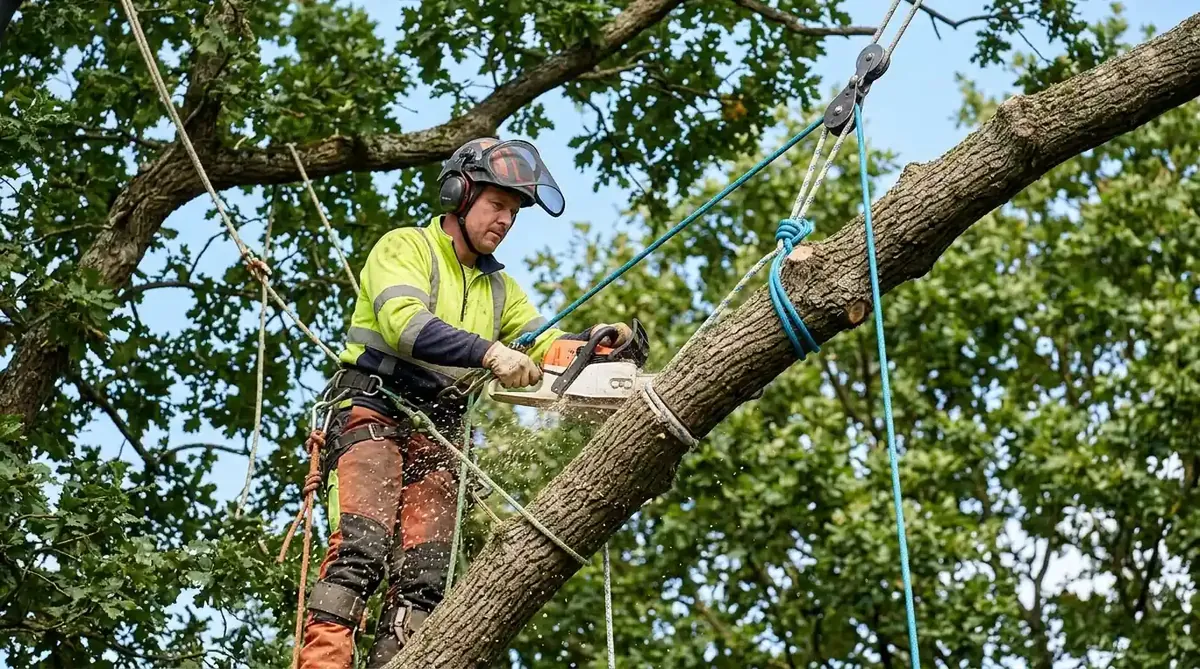
Clearing does not mean clear cutting. Many wooded lots in our area have native oaks and hickories hidden in the brush. We work around them. Once the invasive growth is gone, those trees get more light and water and often look better within a season or two.
How a clearing job works
Walk the property
We walk the area with you and mark what stays and what goes.
Cut and clear
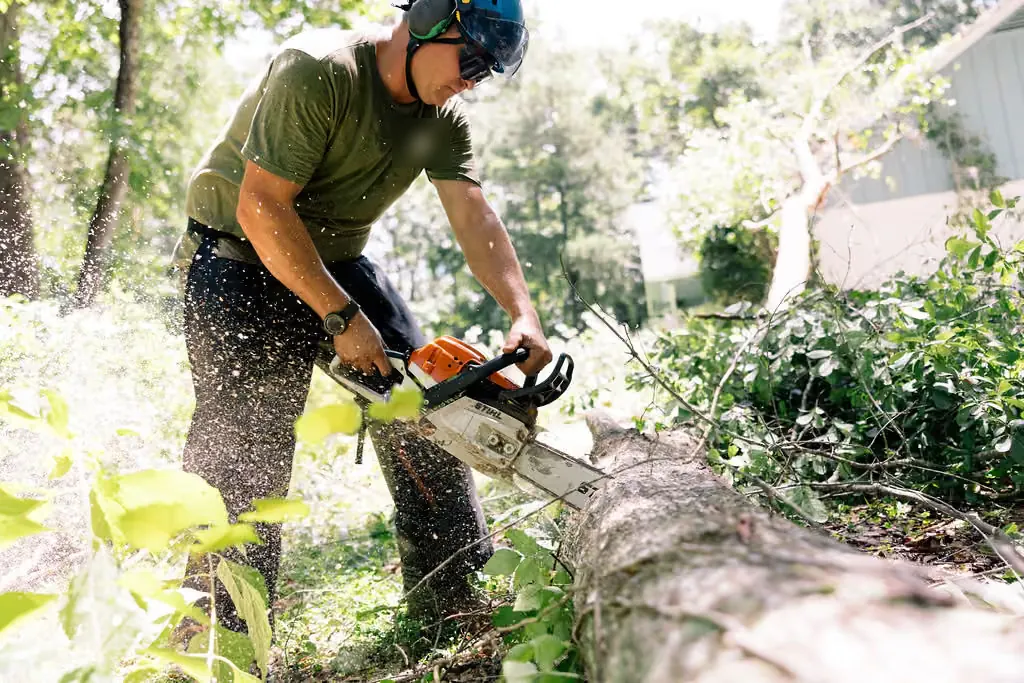
We cut the brush and unwanted trees and remove the debris.
Take care of stumps
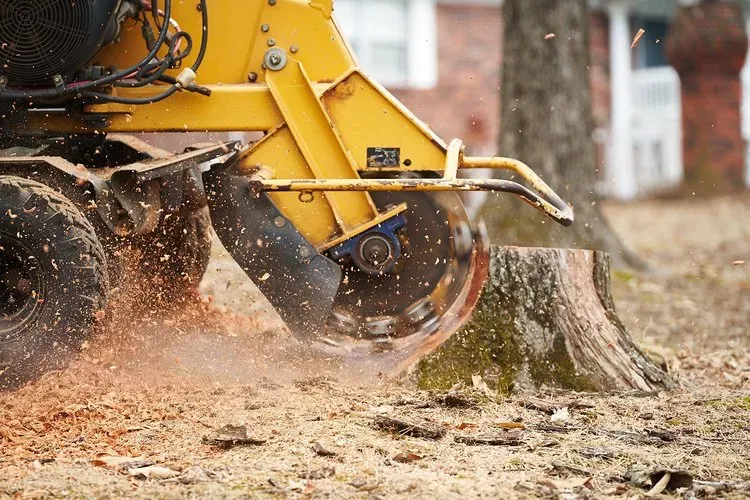
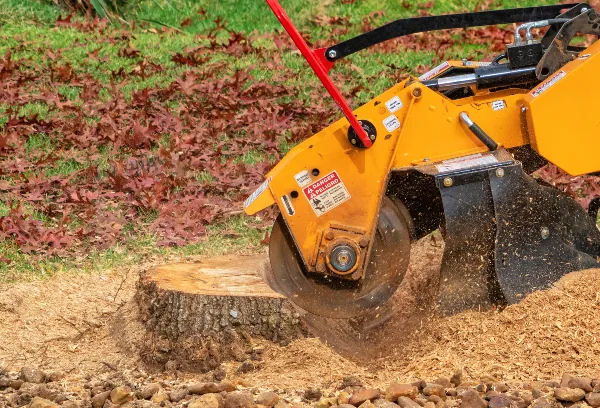
Larger stumps can be ground down. See stump grinding.
Plan what comes next
Bare soil should be covered so it does not erode or fill with weeds. That could be native plantings, mulch, seed, or sod. Our landscaping crew can take care of that part too.
Good times of year to clear
Late fall and winter are great for clearing. Buckthorn is easy to spot in late fall because it is still green. In winter the ground is often firmer, and there is less damage to the soil. Clearing can be done other times of year too.